-
-
-
Bhaganbigha Block - Rahui, Bihar Sharif, Bihar 803118 Near Of Bhaganbigha P.S
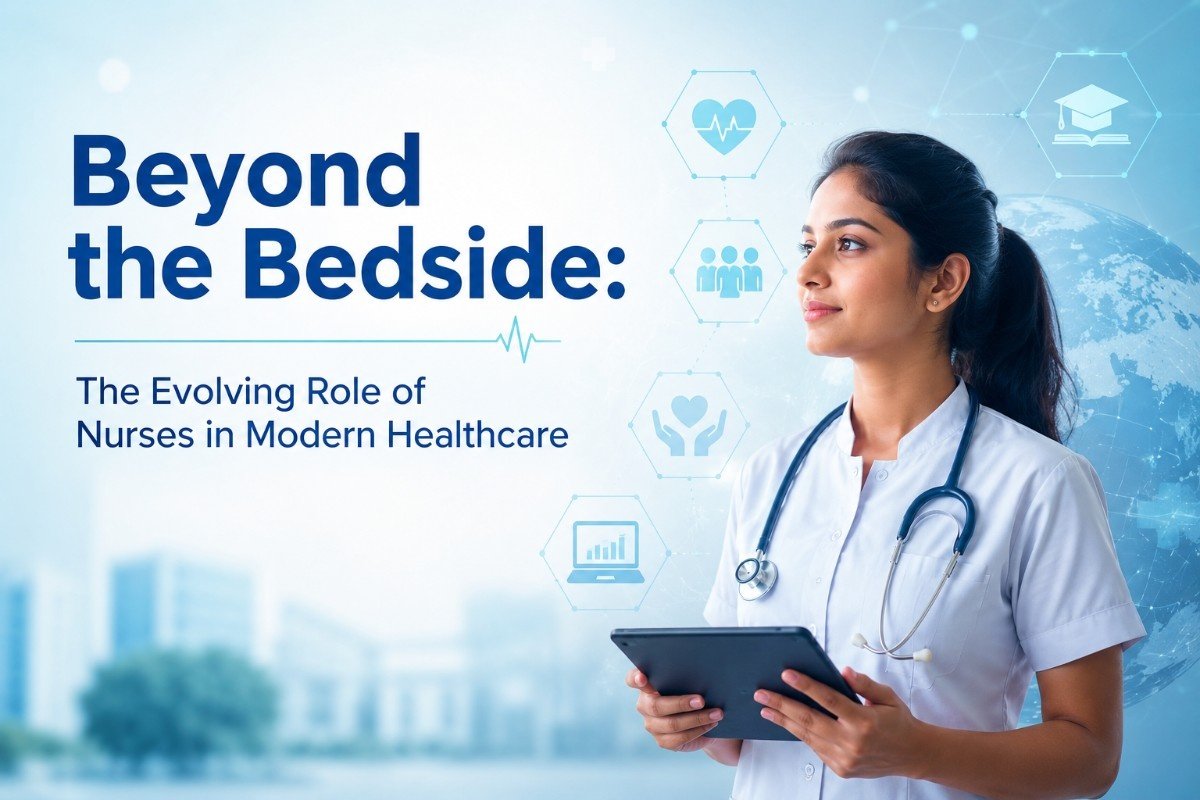
Beyond the Bedside: The Evolving Role of Nurses in Modern Healthcare
Rohit Kumar
June 06, 2026
Beyond the Bedside: The Evolving Role of Nurses in Modern Healthcare
Discover how modern nurses are transforming healthcare through technology, mental health support, community care, and patient advocacy. Explore the future of nursing careers and opportunities in healthcare.
"A nurse's compassion can heal beyond medicine, bringing comfort, hope, and strength when patients need it most."
The nursing profession has evolved far beyond traditional bedside care. While administering medications, monitoring patients, and assisting physicians remain essential responsibilities, modern nurses now play a much broader role in healthcare delivery.
Driven by technological innovation, growing mental health awareness, and a stronger focus on community-based preventive care, nursing has become one of the most dynamic and impactful professions in the healthcare sector. Today's nurses are clinicians, educators, counselors, technology users, and community leaders all at once.
Understanding the Modern Nursing Profession
Nursing is no longer limited to hospitals and clinical settings. Modern healthcare systems require nurses to participate in patient advocacy, health education, technology management, and preventive healthcare initiatives.
Why Nursing Is Evolving
Advancements in Medical Technology
Healthcare facilities increasingly rely on digital tools and smart medical systems to improve patient outcomes.
Growing Focus on Mental Health
Patients require comprehensive care that addresses both physical and emotional well-being.
Demand for Preventive Healthcare
Healthcare organizations are emphasizing disease prevention rather than simply treating illnesses after they occur.
The Rise of the Tech-Savvy Nurse
Technology has transformed almost every aspect of healthcare delivery. Modern nurses are expected to work efficiently with advanced digital systems while maintaining high-quality patient care.
Technology in Modern Nursing
Digital Healthcare Systems
Electronic Health Records (EHR)
Benefits of EHR
Digital record systems help nurses access and update patient information quickly and accurately.
Telehealth Services
Benefits of Telehealth
Remote healthcare services allow nurses to support patients in rural and underserved communities.
AI-Powered Healthcare Tools
Role of Artificial Intelligence
Artificial intelligence assists healthcare professionals in diagnosis, monitoring, and treatment planning.
Smart Medical Equipment
Importance of Smart Devices
Modern devices provide real-time patient monitoring and improve healthcare efficiency.
Benefits of Technology in Nursing
Improved Patient Outcomes
Faster Diagnosis
Better Treatment Accuracy
Technology enables faster diagnoses and more accurate treatment decisions.
Better Communication
Healthcare Team Coordination
Efficient Information Sharing
Digital systems improve coordination among healthcare teams.
Reduced Administrative Burden
Workflow Automation
More Time for Patient Care
Automation allows nurses to spend more time with patients and less time on paperwork.
Balancing Technology and Human Care
Maintaining Empathy
Human-Centered Care
Importance of Compassion
Technology should support patient care, not replace human interaction.
Building Patient Trust
Strengthening Relationships
Emotional Support
Effective nurses combine technical skills with compassion and emotional support.
Championing Holistic and Mental Health Care
Modern healthcare recognizes that physical health is closely connected to emotional and psychological well-being.
What Is Holistic Care?
Treating the Whole Person
Physical Health
Medical Condition Management
Managing illnesses, injuries, and medical conditions.
Mental Health
Emotional Resilience
Supporting emotional and psychological well-being.
Social Well-Being
Community and Family Influence
Understanding the influence of family, relationships, and environment on health.
The Nurse's Role in Mental Health Care
Identifying Mental Health Concerns
Common Conditions
Anxiety Disorders
Depression
Trauma and Stress-Related Conditions
Emotional Distress
Nurses are often the first healthcare professionals to recognize these symptoms.
Providing Emotional Support
Patient Guidance
Reassurance During Recovery
Nurses help patients cope with challenging medical situations through guidance and reassurance.
Collaborative Care
Working with Specialists
Comprehensive Treatment Planning
Nurses collaborate with psychologists, psychiatrists, and counselors to ensure complete care.
The Shift Toward Community and Preventive Healthcare
Healthcare systems worldwide are transitioning from reactive treatment models to preventive care approaches.
Understanding Preventive Healthcare
Disease Prevention Strategies
Health Education
Promoting Healthy Lifestyles
Teaching communities about healthy lifestyle choices.
Early Disease Detection
Routine Health Screening
Promoting regular health screenings and medical checkups.
Vaccination Awareness
Community Immunization Programs
Increasing public understanding of immunization benefits.
Community Nursing Responsibilities
Health Camps
Community Outreach Programs
Accessible Healthcare Services
Organizing outreach programs to provide healthcare services in local communities.
Public Health Education
Key Health Topics
Nutrition
Physical Activity
Hygiene Practices
Disease Prevention
Educating communities to improve public health outcomes.
Chronic Disease Management
Long-Term Care Support
Managing Diabetes and Hypertension
Supporting patients living with chronic illnesses.
Skills Required for Community Nursing
Communication Skills
Effective Public Interaction
Health Awareness Programs
Educating diverse populations effectively.
Cultural Awareness
Understanding Community Needs
Respecting Diversity
Addressing healthcare challenges across different backgrounds.
Leadership Abilities
Organizing Healthcare Initiatives
Managing Outreach Activities
Leading healthcare programs and awareness campaigns.
The Irreplaceable Human Element in Nursing
Despite advancements in artificial intelligence and healthcare automation, human compassion remains the foundation of quality nursing care.
Why Human Connection Matters
Patient Advocacy:
Protecting Patient Interests
Ensuring Better Outcomes
Nurses represent patient concerns throughout treatment.
Emotional Support:
Comforting Patients and Families
Building Trust
Providing reassurance during difficult situations.
Ethical Decision-Making:
Professional Responsibility
Integrity in Care
Nurses regularly face complex situations requiring sound judgment.
Core Values of Nursing
Compassion:
Patient-Centered Care
Understanding Patient Needs
Providing care with empathy and kindness.
Integrity:
Ethical Healthcare Practices
Honesty and Accountability
Maintaining professional standards.
Discipline:
Consistent Professionalism
Quality Patient Care
Following established healthcare procedures.
Accountability:
Responsibility for Outcomes
Commitment to Excellence
Taking responsibility for patient safety and care quality.
Future Career Opportunities in Nursing
Clinical Nursing Careers
Hospital Nursing
Critical Care Nursing
Emergency Nursing
Surgical Nursing
Specialized Nursing Fields
Mental Health Nursing
Pediatric Nursing
Community Health Nursing
Geriatric Nursing
Oncology Nursing
Leadership and Administrative Roles
Nursing Supervisor
Nursing Educator
Healthcare Administrator
Clinical Manager
Skills Required for Success in Modern Nursing
Technical Skills
Patient Assessment
Clinical Procedures
Healthcare Technology Usage
Medical Documentation
Soft Skills
Communication
Critical Thinking
Problem-Solving
Emotional Intelligence
Team Collaboration
Adaptability
Why Nursing Is One of the Best Healthcare Careers Today
Growing Demand
Healthcare systems worldwide require skilled nursing professionals.
Career Stability
Nursing offers long-term employment security.
Diverse Opportunities
Professionals can work in hospitals, clinics, educational institutions, NGOs, and community organizations.
Global Career Prospects
Qualified nurses are in demand across India, the Middle East, Europe, Australia, Canada, and other countries.
Personal Fulfillment
Nursing provides the opportunity to make a meaningful difference in people's lives every day.
The Future of Nursing: Adaptability Is the Key
Future Roles of Nurses
Clinicians:
Expert Patient Care
Delivering Advanced Healthcare Services
Technologists:
Digital Healthcare Expertise
Using Modern Medical Technologies
Counselors:
Mental Health Support
Enhancing Emotional Well-Being
Community Leaders:
Public Health Awareness
Disease Prevention and Education
Lifelong Learners:
Continuous Professional Development
Adapting to Healthcare Innovations
Conclusion
The nursing profession has moved far beyond traditional bedside responsibilities. Today's nurses play critical roles in technology-driven healthcare environments, mental health support systems, community health initiatives, and patient advocacy programs.
As healthcare continues to evolve, the demand for adaptable, compassionate, and highly skilled nursing professionals will only increase. For students passionate about healthcare, nursing offers a rewarding career path filled with opportunities for growth, leadership, and meaningful service to society.
Build Your Future in Healthcare
Why Choose D.P. Singh Institute of Education (Department of Nursing)?
D.P. Singh Institute of Education is dedicated to developing future-ready nursing professionals through quality education, practical training, and ethical healthcare values.
Programs Offered
B.Sc Nursing
Post Basic B.Sc Nursing
GNM
ANM
Key Highlights
Modern Curriculum
Advanced Clinical Training
Experienced Faculty
Hands-On Learning Opportunities
Professional Development Focus
Ethical Healthcare Education
By combining academic excellence with real-world clinical exposure, D.P. Singh Institute of Education prepares students to confidently face healthcare challenges and become leaders in modern patient care.
Latest Blogs
Flexibility
You can study anytime anywhere
Lower Costs
Our Courses are more affordable
Documentation
All the details will be safely stored